Introducing: Geopolitics & World Affairs – Navigating the Labyrinth of Power
To my esteemed readers, my thoughtful followers, and fellow citizens of this complex, interconnected world,
For many months, a consistent and resonant request has echoed through your messages, comments, and personal correspondences: a call to delve beyond the horizon of individual insight and into the vast, dynamic theater of global power. You have urged me to apply a different lens—one that scrutinizes the grand chessboard of nations, deciphers the silent language of diplomacy, and traces the deep, often hidden currents that shape the destiny of continents. Today, I am profoundly honoured to answer that call.
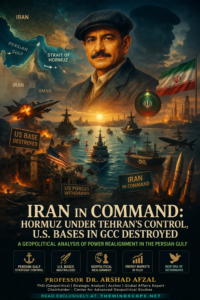
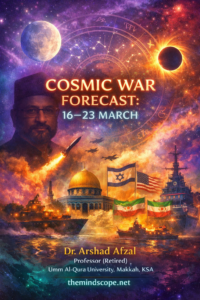
It is with a sense of both great responsibility and genuine excitement that I unveil the newest pillar of The MindScope Network: Geopolitics & World Affairs.
This is more than just a new section; it is a commitment. A commitment to move beyond the sensationalist headlines and the 24-hour news cycle’s shallow analysis. This platform will be a sanctuary for depth, for context, for the long view. In an age of information overload, we will seek not merely to add to the noise, but to provide a signal—a clear, reasoned, and ethically grounded perspective on the forces that are actively sculpting our collective future.
The Mandate for a Deeper Understanding
Why now? Why this? The answer lies not only in your requests but in the very nature of our time. We are living through a historic pivot—an era where the post-Cold War order is receding into history, and a new, more complex, and multipolar structure is being born, often in fits of tension and conflict.
The Ukrainian wheat field shaped by trenches, the South China Sea churned by naval patrols, the silicon chip that has become a strategic asset as critical as oil, the silent cyber-battlefields where new forms of warfare are being pioneered. We feel the tremors of distant decisions in the price of our bread, the security of our data, and the very air we breathe. The abstract concept of “globalization” has dissolved into the tangible reality of our daily lives. To be ignorant of geopolitics is to be a passenger on a ship, blind to the charts and the approaching storm. This category is an invitation to come to the bridge, to understand the navigation, and to comprehend the storms and the doldrums on our shared horizon.
This is not a call to cynicism, but to clarity. It is founded on the belief that an informed citizenry is the bedrock of a functional democracy and a stable world. When we understand the why behind a nation’s actions—the historical grievances, the geographical imperatives, the economic ambitions, and the ideological drivers.
The Lens of Earned Perspective
You have placed your trust in me, and for that, I am eternally grateful. This trust is a sacred charge, and it is one I do not take lightly. It is built not on arrogance, but on the solid foundation of a decades-long pilgrimage through the world’s great halls of learning. This journey was not undertaken to accumulate accolades, but to assemble a unique analytical toolkit.
From the University of the Punjab, I inherited a deep understanding of the post-colonial experience, of the simmering passions and complex identities that define a region stretching from the Khyber Pass to the Bay of Bengal—a region that is itself a microcosm of global rivalries and aspirations.
At Leiden University, nestled in the heart of Europe, I was immersed in the tradition of Grotius, in the very birth of international law and the European state system. This provided the framework for understanding the rules-based order—its strengths, its frailties, and its challengers.
The Graduate Institute of Geneva offered a front-row seat to the machinery of global governance—the UN, the WTO, the Red Cross. Here, I witnessed firsthand the intricate, often painstaking, dance of multilateral diplomacy.
And at the University of Tokyo, I engaged with the strategic thought of the Indo-Pacific, a view of the world from its most dynamic economic and strategic center of gravity.
This academic tapestry, woven across continents and intellectual traditions, allows for an analysis that is neither purely Eastern nor Western, but synthesizes the best of both to achieve a more holistic view.
This does not mean I will always be correct—geopolitics is the art of analyzing human behavior at a colossal scale, and humans remain wonderfully, frustratingly unpredictable.
Therefore, I make this pledge to you: The insights shared here will be:
- Rooted in Fact, Not Fantasy: Every analysis will be grounded in verifiable data, historical precedent, and strategic logic.
- Multi-dimensional: We will explore issues through the simultaneous lenses of security, economics, technology, and ideology. A trade deal is never just about trade; a military exercise is never just about drills. We will look for the patterns in the chaos.
- Ethically Anchored: Power analysis without a moral compass is a dangerous exercise. We will never shy away from asking the fundamental question: To what end? What is the ultimate human consequence of these grand strategies?
- Accessible, Yet Profound: We will respect the complexity of these issues while striving to make them comprehensible to the engaged non-specialist.
What to Expect in This Space
Consider this category your curated guide to the world stage. We will dissect the great power competition between the United States and China, but we will also peer into the rise of the “Global South.” We will examine the weaponization of economic interdependence. We will question the future of NATO, the ambitions of a resurgent Russia, the quest for strategic autonomy in Europe and India, the resource nationalism of Latin America, and the demographic time bombs and technological leaps that will redefine the balance of power before the decade is out.
Our explorations will include:
- Deep-Dive Analyses: Comprehensive examinations of single, pivotal issues—from the geopolitics of artificial intelligence to the strategic importance of rare earth minerals.
- The Ripple Effect: Tracing how a single event in one corner of the globe creates waves that lap at shores thousands of miles away.
- Historical Echoes: Understanding how the treaties of 1919, the partitions of 1947, or the economic shocks of the 1970s directly inform the crises and opportunities of today.
- Future Casting: Informed explorations of potential futures—the rise of new powers, the changing nature of warfare, and the long-term strategic projects that are unfolding now.
We embark on this journey not as detached observers, but as engaged participants in a shared human project. The goal is not to predict an inevitable future, but to understand the present so clearly that we can help shape a better one.
So, I invite you to pull up a chair to this global conversation. Let us navigate the labyrinth of power together, with wisdom as our map and a commitment to truth as our compass.
The first analysis will be published shortly. I look forward to hearing your thoughts, engaging in respectful debate, and learning with you as we chart the uncertain, yet profoundly consequential, waters of the 21st century.
With profound gratitude and intellectual anticipation,
Dr. Arshad Afzal
Former Faculty Member, Umm Al-Qura University, Makkah, KSA
The MindScope Network – themindscope.net