Experimental Short Story Series #63
Title: The Mirror That Remembers
By Faraz Parvez
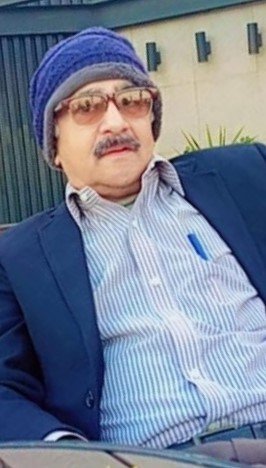
Professor Dr. (Retired) Arshad Afzal
Former Faculty Member, Umm Al Qura University, Makkah, KSA
(Pseudonym of Professor Dr. Arshad Afzal)
The haveli was older than memory itself.
It stood like a forgotten thought in the heart of old Lucknow, its façade flaking like aging skin, its wooden balconies sagging with whispered secrets. Time had tried to swallow it, but the house refused to die.
When the Raza family inherited it after a distant relative passed—childless, nameless, friendless—they took it as a blessing.
It was not.
The Mirror
In the upstairs master bedroom, behind a moth-eaten velvet curtain, stood an ornate full-length mirror, its frame carved with crescent moons and faces that didn’t smile.
When they uncovered it, dust spilled like ash. At the center of the glass was a faint outline—as though someone had leaned into it… and never left.
Nimra, the eldest daughter, 17 and curious in dangerous ways, was the first to really look.
First Reflection
That night, Nimra noticed something strange.
When she stood before the mirror, her reflection didn’t blink when she did. It was always a second late. Always watching.
And behind her…
Shadows.
Moving.
She told her mother. Her mother told her not to speak such things during Safar—an inauspicious month.
She told her younger brother. He laughed.
But the mirror never did.
The Second Night
She began waking with scratches on her neck.
Hair tangled in knots she didn’t tie.
One morning, she saw her own reflection smiling while she wept.
And that night, the reflection didn’t show her in her salwar kameez.
It showed her in a white kafan, with eyes wide open.
The Mirror’s Memory
Through whispered phone calls and yellowed books from old Ferozsons bookstores, she learned the mirror was rumored to be “Zehra’s Mirror”—named after a courtesan who lived and died in the haveli 120 years ago.
Zehra, they said, cursed the glass to remember the final reflection it saw before a death. Anyone who stood before it long enough became part of that memory.
But the memory didn’t stay trapped.
It leaked.
She Stopped Looking
But the damage was done.
She began dreaming in reverse—memories she didn’t have, places she’d never seen.
She painted a woman she didn’t know, in styles she never learned.
And sometimes, she found words in her notebook written in mirror script—backward, curved, etched with someone else’s madness.
Then One Day…
Her mother found her sitting silently in front of the mirror, not blinking. Not moving.
When she called her name, Nimra replied:
“She’s inside. She remembers everything.”
The reflection blinked.
But Nimra didn’t.
Aftermath
The mirror cracked the next morning.
Not shattered. Just a thin, cruel line—right where Nimra’s heart would be in the reflection.
The family moved out within a week.
They covered the mirror again.
But no one dared remove it.
No one dared donate it.
Because sometimes—late at night—the mirror unveils itself.
A Note from the Author
This tale isn’t about a haunted object.
It’s about the things we reflect but never confess.
The silent scream inside every obedient child.
The legacy of unspoken trauma.
The mirror doesn’t haunt us.
It remembers us.
Even when we try to forget.
📚 Keep Following the Shadows
If you found this unsettling…
There’s more where it came from.
Join our literary journey through the uncanny, the psychological, and the mystical every day on:
Where fiction meets the forgotten.
Where mirrors remember.
By Faraz Parvez
Professor Dr. (Retired) Arshad Afzal
Former Faculty Member, Umm Al Qura University, Makkah, KSA
(Pseudonym of Professor Dr. Arshad Afzal)