Experimental Short Story Series #40
Title: The Soul Archivist
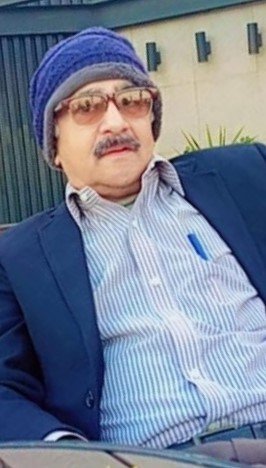
By Faraz Parvez (Pen name of Professor Dr. Arshad Afzal, former faculty member, Umm Al-Qura University, Makkah, KSA)
In a world that remembers everything, forgetting becomes a crime.
Welcome to today’s immersive addition to our celebrated 60 Experimental Short Stories Series—a literary adventure where genre meets innovation, and tradition bows before imagination. This is not just fiction. This is a slow-burning revolution of narrative form, sparked by thought, nurtured by creativity, and delivered to you daily at farazparvez1.blogspot.com.
In story #40, we dive headfirst into a speculative abyss where memories are currency, and the soul is but a fragmented archive waiting to be sold.
The Story Begins:
He called himself an archivist, though there were fancier names for it now—NeuroCurator, Memory Broker, Soul Stylist. But Aftab preferred the moniker that smelled of ink and aged paper. In his tiny basement office beneath the megacity’s neon bones, he dealt not in commodities or stocks, but in memories—your first heartbreak, your grandmother’s lullaby, the birth cry of a long-dead son.
Clients came to him when they wanted to forget. Corporations hired him when they wanted to bury the truth. Lovers bribed him when they couldn’t stand remembering one another. And Aftab, ever neutral, archived, tweaked, deleted. Never judged.
Until one rainy Tuesday, a black file appeared in his vault—uncoded, unregistered, untraceable.
It wasn’t supposed to exist.
The fragment opened with a woman’s voice whispering “I didn’t mean to start the fire.”
Then a flash of a crowd screaming, an explosion tearing through a market, and a child crying in a language no longer spoken.
There was no metadata, no neural tag, no ownership imprint.
This was an orphan memory.
And it was dangerous.
What is memory if not power?
The fragment wasn’t just recollection—it was a prophecy.
The market in the memory? Scheduled to open next week.
The explosion? Still an intention hidden in someone’s mind.
The child? Unborn. A ghost from the future.
Aftab had never believed in fate. But now he had the unbearable burden of choice:
— Let the memory rot in the vault as protocol demanded.
— Sell it to the government, who would weaponize it.
— Or leak it. Let the world see what hadn’t happened—yet.
He folded the memory into his neural drive, stepped out into the storm, and let the rain baptize him into uncertainty.
He would become the soul’s rebel scribe.
Why This Story Matters:
“The Soul Archivist” explores themes of surveillance, ethical decay, and the commodification of the human experience. It’s a speculative hymn to the very act of remembering—and forgetting—in a world addicted to control. And through Aftab’s lonely rebellion, we’re asked: if the future is a memory we haven’t made yet, do we still own it?
What Comes Next?
This is entry #40 in our proud Experimental Short Stories Series—crafted with care, intellect, and literary boldness. These are not just tales, but witnesses of possibility, stretching the limits of narrative structure.
Soon, this collection will evolve into a published eBook and a hardbound edition—a timeless anthology of modern literary experimentation under the creative vision of Faraz Parvez, aka Professor Dr. Arshad Afzal.
Your presence here fuels our ink.
Your curiosity kindles our courage.
Keep coming back to farazparvez1.blogspot.com, where every story is a door—and we never lose the key.
—
Tomorrow, Story #41 awaits.
Will it whisper, shout, or vanish mid-sentence?
Stay with us and find out.