🔥 THE FRACTURED GENERATION
A Deep Socioeconomic & Psychological Profile of Gen Z — Their Crises, Behaviors, Fears & the Remedies That Can Save Their Future
By Faraz Parvez
Professor Dr. (Retired) Arshad Afzal
www.TheMindScope.net
INTRODUCTION: THE MOST MISUNDERSTOOD GENERATION IN HISTORY
Every generation believes the next one is “spoiled” or “lost,” but Gen Z is the first generation born inside a global storm: economic crashes, climate anxiety, pandemics, digital overload, unstable careers, and an algorithm-controlled world.
They did not simply “grow up”—
they survived an emotional, digital, and economic battlefield.
Gen Z (born roughly 1995–2010) and Gen Alpha (2011 onwards) are not just younger versions of Millennials—they are a new species of humanity, shaped by:
- crisis
- screens
- isolation
- inflation
- instant gratification
- information overdose
- and a collapsing world order
They are gifted yet fragile, brilliant yet confused, connected yet lonely.
This article explores who they are, what’s breaking them, and how they can be healed.
1. THE SOCIOECONOMIC REALITY THEY INHERITED
A. The Collapse of Traditional Life Pathways
For decades, life followed a simple formula:
Study → Degree → Job → Marriage → Respect → Stability
Gen Z watched that formula collapse in front of them.
Today:
- Degrees do not guarantee jobs.
- Stable career paths have turned into unstable gigs.
- Inflation eats through salaries.
- Rent is unaffordable.
- Marriage is delayed or abandoned.
- Professional growth is unpredictable.
They feel betrayed by a system that promised success through education but delivered unemployment.
This is why Gen Z says:
“Why follow rules of a world that doesn’t reward rule-followers?”
B. Economic Trauma
Gen Z grew up watching:
- Parents losing jobs
- Businesses collapsing
- Medical bills draining savings
- Financial stress destroying families
They are traumatized by money.
They don’t trust traditional careers.
They don’t believe loyalty protects you.
They don’t believe hard work guarantees success.
This leads to:
- Income anxiety
- Fear of the future
- Imposter syndrome
- Low risk tolerance
- Depression tied to finances
C. The Digital Wealth Illusion
Instagram, TikTok, YouTube, and reality TV created a fake economic universe where:
- teenagers “earn millions” from nowhere
- everyone travels, eats luxury food, drives dream cars
- beauty, bodies, vacations, clothes look perfect
- failure doesn’t exist
Gen Z consumes this every day, and the result is toxic:
- Unrealistic expectations of life
- Pressure to succeed instantly
- Envy
- Dissatisfaction with reality
- Loss of self-worth
They compare their real life with someone else’s edited fantasy—
and lose every time.
2. THE PSYCHOLOGICAL LANDSCAPE: A GENERATION ON THE EDGE
A. The Age of Anxiety
Gen Z is the most anxious generation in recorded history.
Reasons:
- Constant global bad news
- Social comparison
- Financial pressure
- Academic competition
- Fear of missing out
- Fear of being judged
- Fear of failing publicly
Their brain is in fight-or-flight mode all day.
They don’t get peace—not even in their own mind.
B. Identity Crisis: Who Am I Really?
Gen Z is confused about everything:
- Values
- Beliefs
- Career path
- Gender
- Purpose
- Identity
- Belonging
Why?
Because they grew up juggling:
- Western culture online
- Eastern culture at home
- Global ideologies
- Algorithmic opinions
- Peer pressure
- Cancel culture
- Conflicting information
Their inner self never gets time to breathe.
C. The Loneliness Epidemic
Despite being the most connected through screens,
Gen Z is the loneliest generation.
They lack:
- deep friendships
- warm family bonds
- long conversations
- face-to-face human intimacy
- safe emotional spaces
Online friends replace real ones.
Virtual validation replaces real affection.
Loneliness becomes chronic.
D. Emotional Fragility
This generation is sensitive—not weak, but overstimulated.
They grew up with:
- soft parenting
- digital distractions
- instant gratification
- less discipline
- less outdoor play
- less responsibility
- emotional outsourcing to devices
So as adults, they struggle to:
- tolerate discomfort
- handle failure
- accept criticism
- manage conflict
They panic easily because they were not emotionally trained for the real world.
3. BEHAVIORAL PATTERNS: HOW GEN Z ACTS
A. Short Attention Span Culture
Thanks to TikTok and Reels, their attention span is 8 seconds.
They struggle with:
- long books
- long tasks
- long-term goals
- patience
- deep learning
Their brain craves fast pleasure—not slow mastery.
B. The Hustle Paradox
Gen Z wants success early—but without the suffering older generations endured.
They desire:
- freedom
- money
- wealth
- fame
- virality
- creativity
But they often lack:
- consistency
- long-term discipline
- focus
- resilience
Their ambition is huge,
but their stamina is low.
C. Digital Rebellion
Gen Z does not blindly obey:
- parents
- teachers
- tradition
- society
- institutions
They question everything.
They refuse anything that feels outdated.
They want authenticity—not authority.
This is both their strength and their weakness.
D. Overreliance on Algorithms
Apps decide:
- what they like
- what they buy
- who they follow
- what they believe
- how they think
Their autonomy is shrinking without them realizing it.
4. THE FAMILY CRISIS BEHIND GEN Z’S BROKENNESS
A. Tech-Raised Children
Screens replaced parents.
Phones replaced bonding.
Algorithms replaced storytelling.
Digital babysitting created emotional starvation.
B. Busy, Broken or Absent Parents
Parents:
- overworked
- stressed
- distracted
- emotionally unavailable
- dealing with their own trauma
Kids raised without emotional safety become adults with emotional hunger.
5. SOCIAL PROBLEMS UNIQUE TO GEN Z
A. Porn Addiction & Dopamine Damage
Early exposure warps:
- expectations
- self-image
- intimacy
- relationships
It destroys motivation and rewires the brain’s reward center.
B. Junk Food & Physical Decline
Food delivery culture fuels:
- obesity
- hormonal issues
- early diabetes
- fatigue
- low stamina
C. Substance Abuse & Escapism
Many seek escape through:
- vaping
- weed
- drugs
- alcohol
- sleeping pills
They numb the pain instead of healing it.
D. Radicalization Through Social Media
Social platforms push:
- extreme political views
- conspiracy theories
- toxic worldviews
- ideological polarization
Gen Z is pulled into digital tribes instead of real communities.
6. DIGITAL ECONOMY: OPPORTUNITY OR ILLUSION?
A. The Dream of Online Fame
Everyone wants to be:
- a YouTuber
- a TikToker
- a blogger
- an influencer
But fame is rare—
disappointment is common.
B. The Freelancing Gold Rush
Freelancing is possible, but Gen Z lacks:
- patience to master skills
- discipline to do hard tasks
- consistency to build a portfolio
They want income now, not in six months.
C. AI Skills Gap
AI is creating millions of jobs—
but Gen Z is not trained for them.
A dangerous mismatch.
7. REMEDIES: HOW WE CAN SAVE THIS GENERATION
A. Rebuild Mental Strength
- Dopamine detox
- Digital fasting
- Reading habit
- Quiet thinking
- Meditation
- Nature time
- Journaling
Their mind must regain stability.
B. Return to Real Human Culture
- Conversations
- Family dinners
- Friendships
- Picnics
- Sports
- Outdoor experiences
Human warmth heals algorithmic wounds.
C. Skill-Based Education
Teach them:
- AI literacy
- Communication
- Problem-solving
- Financial literacy
- Leadership
- Coding basics
- Emotional intelligence
These are survival tools.
D. Strong Family Structure
Parents must provide:
- emotional support
- boundaries
- guidance
- time
- affection
Children should not learn life lessons from TikTok.
E. Mastering Discipline
- Routines
- Habit stacking
- Time blocking
- Long-term thinking
- Consistency
Success becomes automatic.
8. WHAT SOCIETY MUST DO
- Schools must modernize
- Governments must regulate harmful digital content
- Communities must create safe youth spaces
- Universities must adopt skill-based models
- Employers must offer training pathways
Saving Gen Z is a collective responsibility.
CONCLUSION: A GENERATION WORTH SAVING
Gen Z is not hopeless—they are overloaded.
Not weak—they are overstimulated.
Not lost—they are misguided.
Their brilliance is real.
Their creativity is unmatched.
Their empathy is powerful.
Their potential is enormous.
But they need:
- guidance
- structure
- emotional grounding
- digital balance
- and meaningful purpose
These are not “spoiled kids.”
These are sensitive minds struggling to breathe in a noisy world.
If we listen, guide and support them,
they will become the strongest generation of the century.
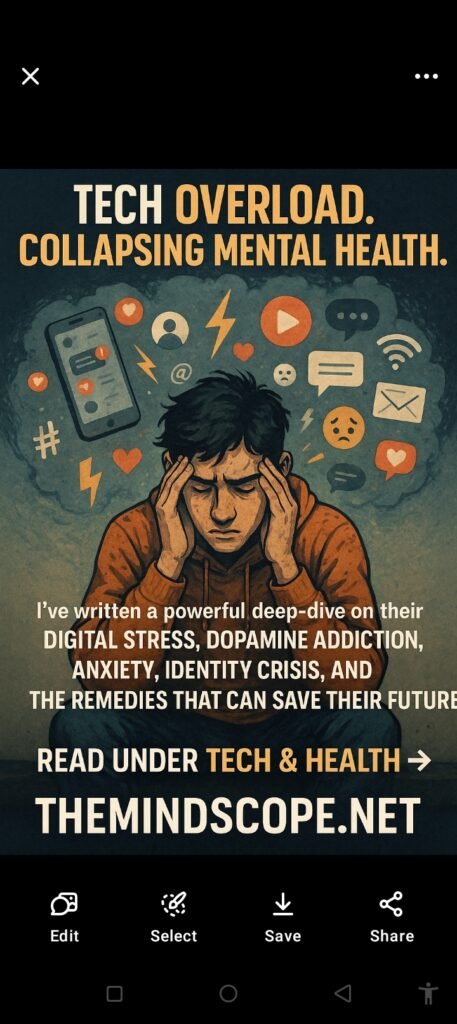
Read more powerful insights on society, psychology, education, technology and human growth at:
🌐 www.TheMindScope.net
By Faraz Parvez
Professor Dr. (Retired) Arshad Afzal